OffshoreElevators.comContact

Technical reference for offshore facilities engineers

Offshore Elevators

Personnel and materials lifts for production platforms, drilling rigs, FPSOs, offshore wind substations and large vessels. What separates them from a building elevator, how to choose a drive type, and what the classification and hazardous area context actually requires of you.

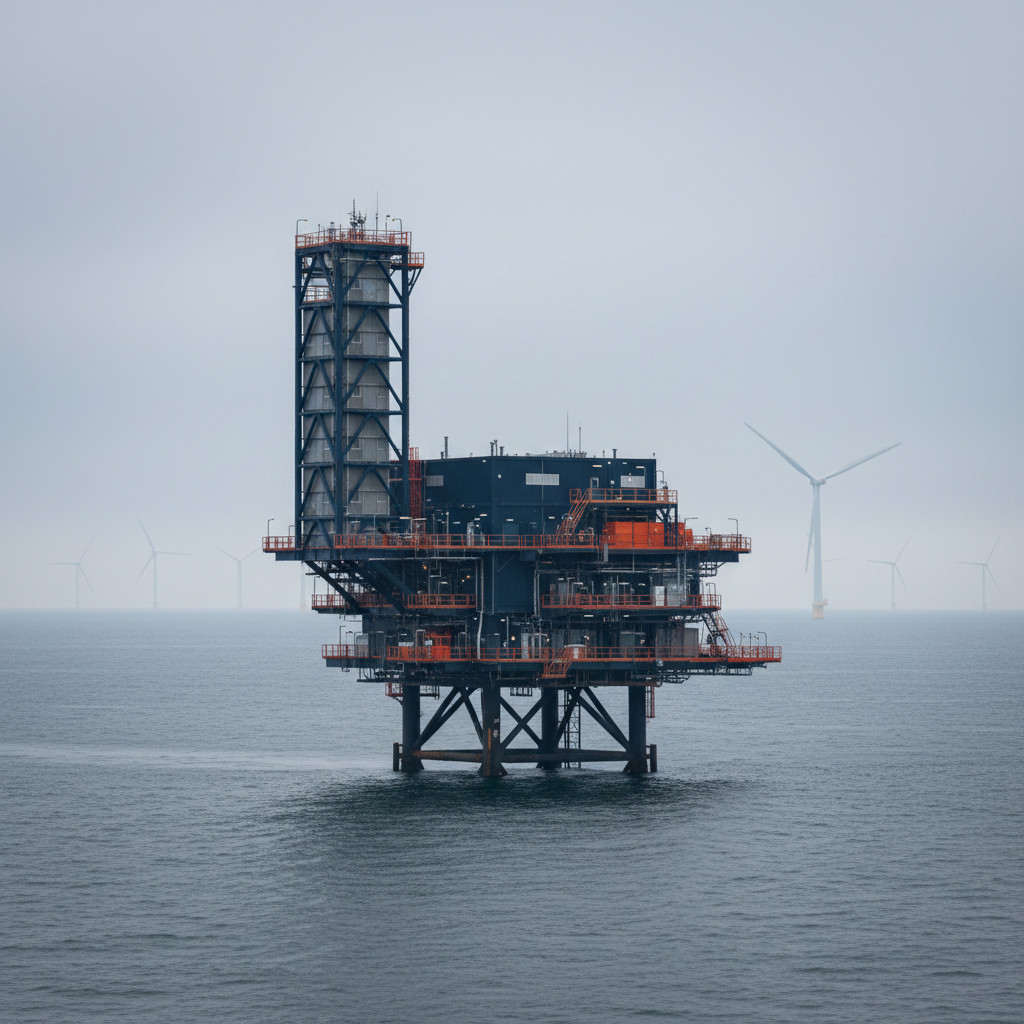
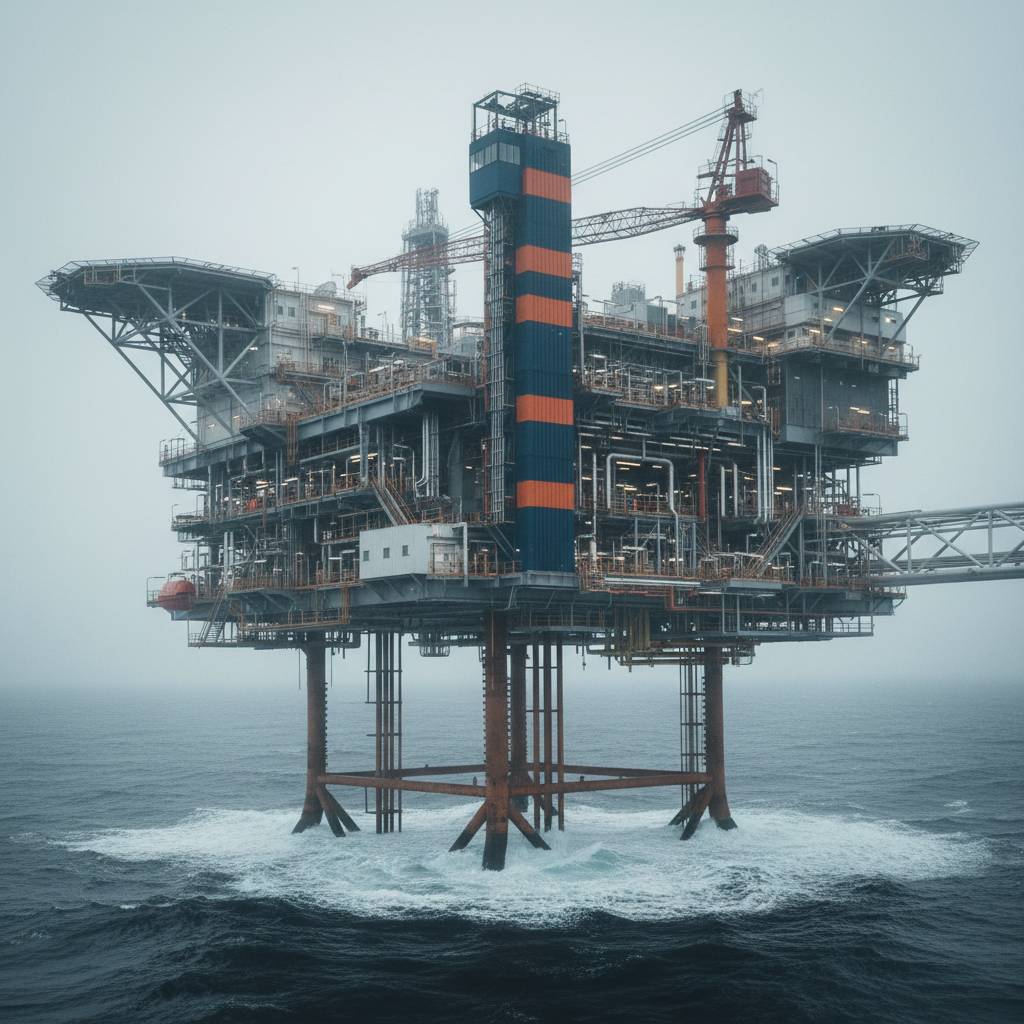
Offshore oil and gas production platform on steel jacket legs with an enclosed personnel elevator mast running vertically up the outside of the structure

The basics

What an offshore elevator is, and why it is a different machine

An offshore elevator moves people and equipment between levels on a marine structure. That much is familiar. Everything that follows from where it is installed is not.

On a fixed platform the lift usually runs up the outside of the structure, connecting the cellar deck, the process decks, the accommodation and sometimes a boat landing. On an FPSO or a vessel it may run inside the hull or the accommodation block. On an offshore wind substation it connects the boat landing and access platform to the topside equipment deck. In each case the job description is the same and the engineering problem is not.

The difference is that a building elevator is installed into a purpose-built, rigid, dry, unclassified shaft, and an offshore elevator is installed onto a structure that was designed to do something else, that moves, that sits in salt spray for its entire life, and that may have a classified hazardous area somewhere along the route. The equipment ends up looking superficially similar and being specified from a different starting point.

The other difference is consequence. When a lift in an office building is out of service people take the stairs. When a lift on a platform is out of service, crew carry tools and spares up long stair runs in weather, planned maintenance slips, and the route you would use to move an injured person is gone. That is why availability, spares holding and the supplier's ability to mobilise an engineer offshore carry more weight in the selection than they would onshore.
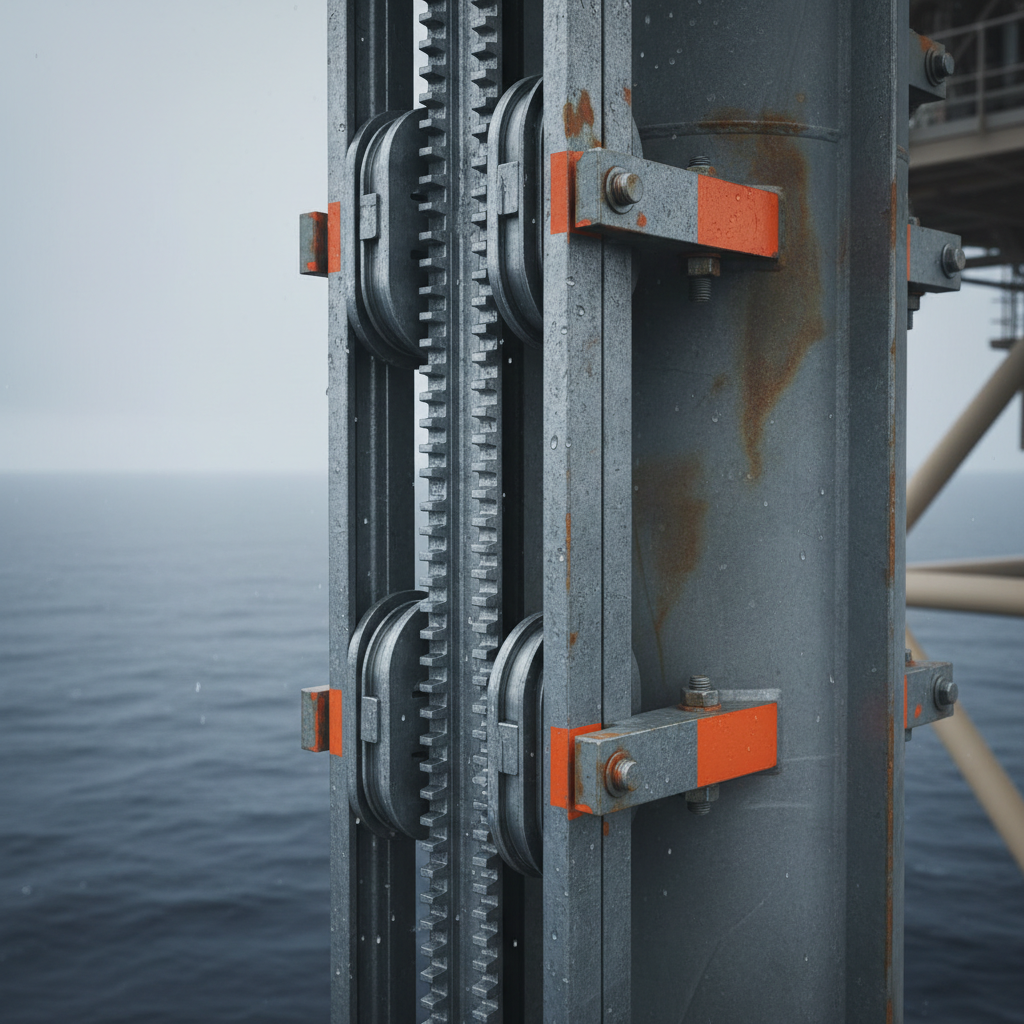
Detail of a galvanised rack and pinion elevator mast section bolted to an offshore platform leg, showing the toothed rack, guide rollers and structural tie-in brackets
Comparison of building elevators and offshore elevators
AspectBuilding elevatorOffshore elevator
Host structureRigid, static, purpose-built concrete or steel shaftJacket, hull or module that deflects under wind, wave and thermal load, and on a floating unit never stops moving
AtmosphereConditioned interior airPermanent salt aerosol, driving rain, UV, and process gas exposure at some locations
Hazardous areaNot normally a factorParts of the travel, the machinery space or the cable route may fall inside a classified zone
Approval routeLocal building control and lift regulationsClassification society, flag or coastal state regime, and the operator's own safety case
Access for serviceTechnician arrives by road, same dayMobilisation by boat or helicopter, weather-dependent, planned around POB limits
Consequence of downtimeInconvenience, stairs are availableManual handling up long stair runs, delayed maintenance, and a degraded route for a casualty evacuation

Environmental demands

Four loads that decide the specification

Rated load and travel height are the easy inputs. These four are what make an offshore elevator expensive to get wrong.

Salt-spray corrosion

Chloride-laden air is the defining load case for the equipment, not the passengers. It attacks coatings at edges and welds, drives crevice corrosion under fasteners and behind brackets, and creates galvanic cells wherever dissimilar metals meet. Specification answers this with marine-grade base materials, a coating system chosen for offshore atmospheric exposure, generous enclosure ingress ratings, isolation between dissimilar metals, and drainage designed so that no pocket in the assembly can hold standing sea water.

Vessel motion and structural deflection

On an FPSO, a semi-submersible or a vessel, the structure heaves, rolls and pitches continuously and the hull girder flexes. Guide systems have to accommodate that movement without binding, which usually means guides that allow controlled relative movement between the elevator and its host, plus attention to how the car behaves under combined vertical and lateral acceleration. Even on a fixed jacket, wind and thermal growth move the structure enough that a rigidly tied mast will fight it.

Explosive atmospheres

The operator's hazardous area classification drawing decides what equipment is permitted where. If a landing, the shaft, the drive or the cable route sits inside a classified zone, the equipment in that location must carry protection appropriate to the zone and the gas group and be certified under the applicable scheme. Where a lift travels between a classified lower level and an unclassified upper level, the design also has to address what the shaft itself does as a potential path between the two.

Wind and weather loading

An external mast is an exposed structure. It carries wind load in its own right and transfers that load into the host steel, which is often the item that decides whether a retrofit is straightforward or expensive. Operating limits are normally set so that the lift is taken out of service above a defined wind speed, with the mast and its tie-ins designed for a much higher survival condition with the car parked and secured.

Salt spray and sea water beading on a marine grade coated steel surface with a visible weld seam and protective coating system
Offshore wind farm substation platform at sea with a service lift tower on the structure and turbine towers on the horizon

Drive types and duty

Rack and pinion, traction, or hydraulic

Three drive principles cover almost every offshore installation. The host structure and the travel normally narrow it to one before anyone states a preference.

Rack and pinion

A motorised pinion climbs a toothed rack fixed to the mast, so the drive travels with the car.

Strengths

  • No machine room and no counterweight, so the whole assembly can be external
  • Mast is self-supporting and tied back to the host structure, which suits retrofits
  • Tolerates an open, exposed, wet environment better than an enclosed shaft system
  • Modular mast sections make travel height a matter of adding sections

Limits

  • Ride is noisier and less refined than traction
  • Rack, pinion and guide rollers are wearing parts exposed to the weather
  • Speed is modest compared with a traction lift over the same travel

Typical fit: External masts on platforms and jackets, offshore wind substation and turbine access, and most retrofit projects.

Traction

Ropes or belts over a driven sheave, with the car balanced by a counterweight.

Strengths

  • Best ride quality and the quietest option for accommodation areas
  • Energy efficient over long travel because the counterweight offsets the load
  • Well suited to a fully enclosed shaft inside a hull or a topside module

Limits

  • Needs a properly engineered enclosed shaft, plus space for machinery and counterweight
  • Shaft alignment is sensitive to hull or structural deflection
  • Retrofitting a shaft into an existing structure is invasive

Typical fit: New-build accommodation blocks, tall enclosed shafts, and units where passenger comfort is part of the brief.

Hydraulic

A ram, direct or indirect acting, pushes the car, fed from a separate power unit.

Strengths

  • High load capacity in a compact arrangement
  • Low headroom requirement, useful under a congested deck
  • Simple, robust drive with the machinery located away from the shaft

Limits

  • Slower, and less efficient on long travel
  • Hydraulic fluid management, containment and temperature sensitivity
  • Practical travel height is limited compared with the other two

Typical fit: Short travel between two or three levels, goods and stores lifts, and locations where headroom is the binding constraint.

Personnel, materials, or both

Personnel elevators

Rated for people, which brings the full set of passenger safety features into play: overspeed protection, door interlocks that prevent movement with a door open, emergency lowering or evacuation from the car, alarm and two-way communication to a manned location, and lighting that survives a power loss. On a platform these are as much a route for a stretcher or an injured worker as a convenience for the day crew.

Materials and goods lifts

Sized around the heaviest item that has to move rather than the number of people, with the car floor and gates designed for loading with a pallet truck or a trolley. Where a materials lift may occasionally carry an attendant, it must be specified and certified for that from the start rather than used that way informally.

Combined duty

The common offshore answer, because deck space rarely justifies two shafts. A combined unit is specified to the passenger requirements and then sized for the materials case, with clear rated-load marking and a loading regime that stops the goods duty quietly eroding the passenger safety margin.

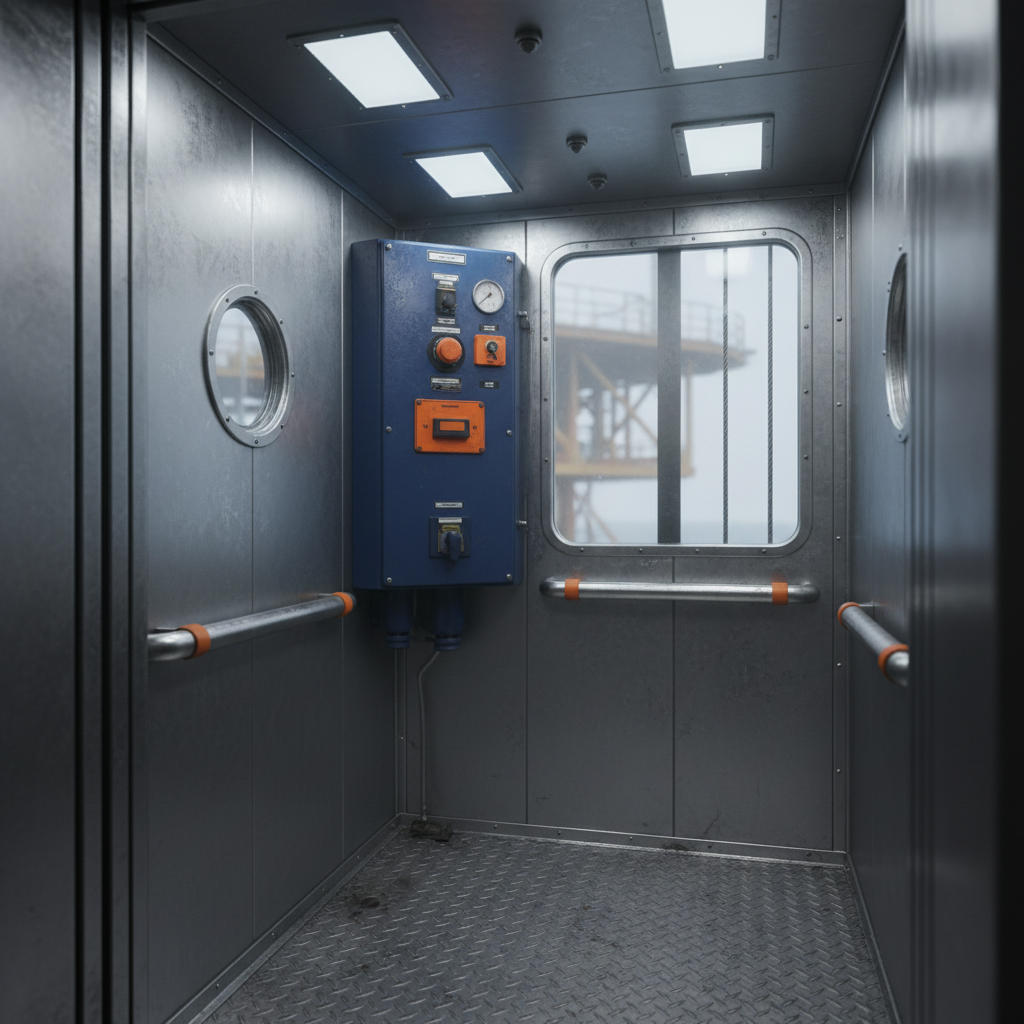
Interior of an enclosed offshore personnel elevator car with brushed stainless walls, a ruggedised industrial control panel, grab rails and a non-slip floor plate

Classification and Ex context

Who approves what, and what each regime actually governs

Three separate approval tracks run in parallel on an offshore lift project. Confusing them is the most common cause of a late redesign.

Classification societies

DNV, ABS and Lloyd's Register are the bodies most often named on offshore projects. What they govern here is the equipment as part of the asset: they set the rules the design is assessed against, review the submitted design and calculations, survey the equipment during manufacture and installation, and carry out periodic surveys through the life of the unit. Which society applies is a function of how the asset is classed, not a choice made at elevator level. The practical consequence for a specifier is that the supplier must be able to produce the design documentation, materials traceability and survey attendance the relevant society expects, and that a supplier who has not done it before will slow the project down.

Hazardous area certification

ATEX is the European regime and IECEx is the international certification scheme. Both govern equipment intended for use in potentially explosive atmospheres: what protection concept the equipment uses, how it is assessed and certified, how it is marked, and what the manufacturer must hold to support it. They do not tell you where the hazardous areas are. That comes from the operator's area classification, which assigns zones based on the likelihood of an explosive atmosphere being present. The specifier's job is to overlay the elevator route on that drawing and then require equipment suitable for the zone and gas group at each location it occupies.

The operator's own regime

Above the class and Ex requirements sits the duty holder's safety case and engineering standards, plus the flag or coastal state regime the asset works under. This is usually where the project-specific requirements come from: lifting equipment examination regimes, permit-to-work constraints on commissioning, evacuation duty expectations, and the operator's own approved vendor list. Getting these on the table at specification stage avoids the late, expensive discovery that a compliant product is not an acceptable one.

Deliberately not listed here: specific rule numbers, clause references, zone definitions and certification figures. They change by society, by edition, by jurisdiction and by asset, and quoting a number out of context is how a specification goes wrong. Work from the current edition of the governing document and the operator's own area classification, and have the supplier confirm compliance in writing against the specific revision that applies to your project.

Installation

Shaft and mast considerations on platforms and vessels

Most of the cost risk on an offshore lift project sits in the interface between the equipment and the structure it bolts to, not in the equipment itself.

01

Structural tie-in

The mast or shaft has to transfer its reactions into steel that was designed for something else. A structural check of the host at each tie-in point is the first engineering task on almost every project, and local reinforcement is a normal outcome rather than a sign of trouble.

02

Base and foundation

The base carries the accumulated load and takes the impact case. On a deck it needs a properly engineered foundation with drainage that keeps sea water moving away rather than pooling at the most highly stressed part of the assembly.

03

Landing geometry

Landings on an offshore structure rarely arrive at even spacing. Deck levels, cellar decks and boat landings dictate where the doors go, and access at each level has to work with the escape routes, walkways and door swings already there.

04

Power and controls routing

Supply and control cabling has to cross zone boundaries, follow approved routes, and survive the same corrosion exposure as the mast. Where the route enters a classified area, the cable entries and enclosures become part of the Ex compliance package.

05

Shaft enclosure decision

An enclosed shaft protects the equipment and improves ride quality, but adds weight, wind area and cost, and can create a path between areas of different classification. An open mast is lighter and easier to inspect, and exposes the equipment to everything. This is the single decision that most shapes the rest of the design.

06

Installation window

Lifting the mast into place usually needs a crane, a weather window and a work area that production can release. Modular mast sections and a pre-commissioned car reduce the offshore hours, which is where the cost and the risk concentrate.

Maintenance and inspection

Keeping a lift serviceable in a marine environment

Offshore, the maintenance regime is a design input rather than an afterthought. Every hour of intervention has to be mobilised, permitted and worked around production.

Coating and corrosion survey

The first thing to fail is almost never the drive. It is the coating at an edge, a weld, a fastener head or a bracket interface, followed by the corrosion that starts underneath it. Regular close visual inspection of the mast, tie-ins, base and car structure, with prompt touch-up, is the cheapest maintenance on the asset.

Drive, rack and guide wear

On a rack and pinion unit the rack, pinion teeth and guide rollers are the consumables. They are checked for wear, alignment and lubrication condition on the manufacturer's schedule, and they wear faster in an exposed marine location than the same equipment would inland.

Doors, interlocks and safety devices

Door interlocks, overspeed devices, limits and the emergency stop chain are the items that keep the lift safe rather than running. They are function-tested on a defined interval, and a fault in any of them is a stop-use condition rather than a defect to carry.

Enclosure integrity and drainage

Ingress ratings only hold while the seals, glands and gaskets do. Enclosures, cable entries and junction boxes are opened, inspected and reseated on schedule, and drain paths are proven clear. In a classified area this inspection is also part of the Ex compliance regime.

Spares and mobilisation

Because a technician cannot simply drive out, the critical spares holding matters more than the mean time between failures. A short, agreed list of items held on the asset, plus a supplier who can get a certified engineer offshore, is worth more than a marginally better availability figure on paper.

Records and periodic examination

Class survey, statutory examination of lifting equipment and the operator's own assurance regime all draw on the same records. Keeping the inspection history, test certificates and modification records complete is what makes the periodic examination a formality instead of a finding.

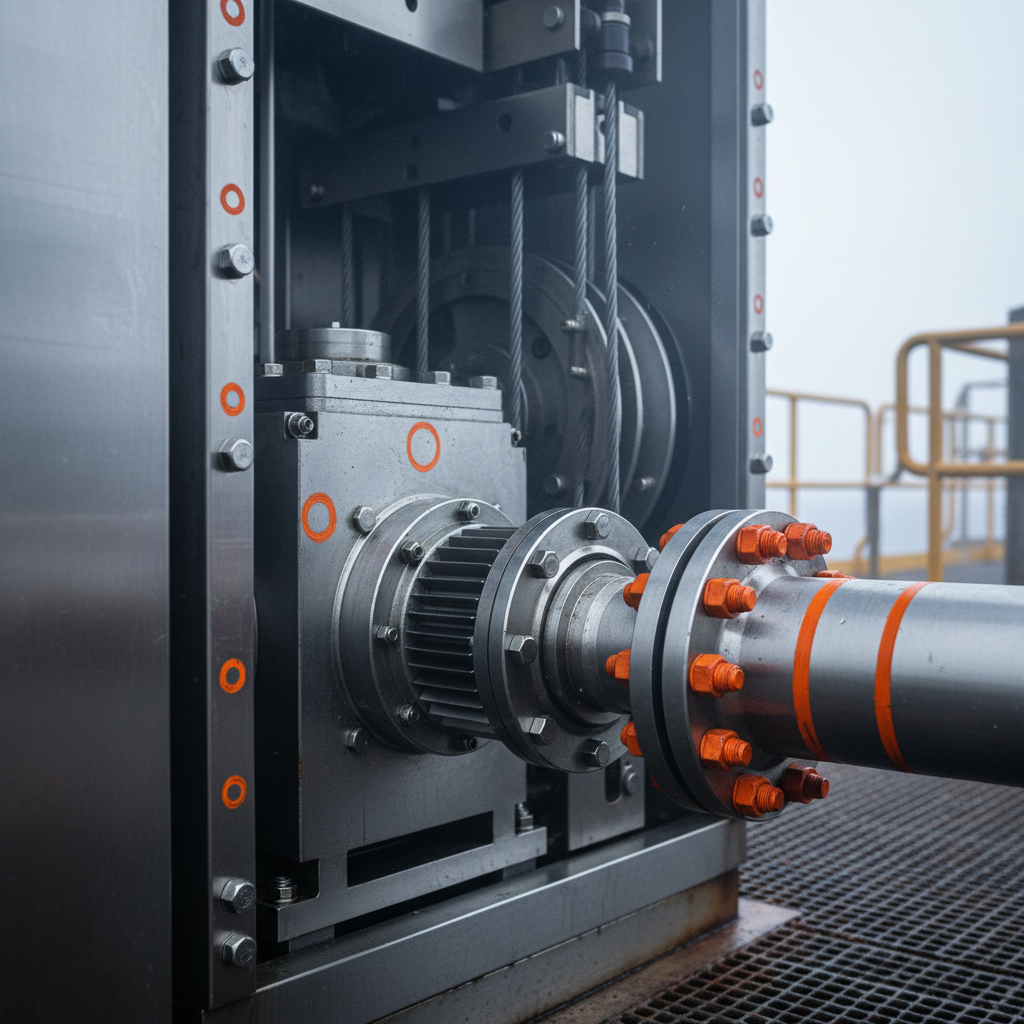
Opened elevator machinery enclosure on an offshore deck showing stainless fasteners, a sealed drive gearbox, cable sheaves and a bolted flange during maintenance

Retrofit vs new-build

Two projects with very different constraints

New-build

The elevator is designed in alongside the structure, so the shaft, the tie-ins, the power supply and the hazardous area boundaries can all be arranged around it. Traction in an enclosed shaft becomes viable. Class review happens as part of the asset's own design approval rather than as a separate modification case. Most of the installation work happens in the yard, where hours are cheap and access is easy.

The trap is scope timing. If the lift is specified late, it inherits whatever space, structure and power the rest of the design left over, and quietly turns into a retrofit that happens to be done in a yard.

Retrofit

An external rack and pinion mast tied into existing steelwork is the standard answer, because it avoids cutting through decks and can be erected in sections. The work concentrates in three places: the structural assessment and reinforcement of the host steel, the routing of power and controls through existing classified areas, and the offshore installation window itself.

Treat the structural check as the first deliverable, not a verification at the end. It determines the mast position, the landing arrangement and a large share of the cost, and it is the finding most likely to force a redesign if it arrives late.

The supply base

A specialist category, not a general elevator market

Offshore elevators are supplied by manufacturers who have built their business around marine and offshore lifting rather than by the general building-lift trade. That matters at shortlisting. The screening question is not whether a supplier makes a good elevator, it is whether they have delivered under the classification society your asset is classed with, whether they can produce the documentation and survey attendance that regime expects, and whether they can support the equipment offshore for its whole service life.

Suppliers active in this category include the names below. They are listed as market context only, with no affiliation or endorsement, and the list is not exhaustive.

Established suppliers in the category

  • Alimak
  • KONE Marine
  • TK Elevator
  • Lift Emotion
  • Mr. Marine
  • Marine Elevators

Company names are the property of their respective owners and appear here for reference only. OffshoreElevators.com is an independent reference site and is not affiliated with any of them.

FAQ

Questions engineers ask before they write the enquiry

What is an offshore elevator?

A passenger or materials lift installed on a marine structure: a fixed production platform, a drilling rig, an FPSO, an offshore wind substation, or a large vessel. It does the same job as a building elevator but is engineered for a host structure that moves and flexes, a permanently corrosive atmosphere, and a route that may pass through a classified hazardous area.

How is it different from a normal building elevator?

Four differences dominate. The structure is not rigid and stationary. The atmosphere is corrosive, so materials, coatings and enclosure ratings sit well above building practice. Parts of the route may be in a zoned hazardous area, which drives explosion-protected equipment selection. And the approval route runs through a classification society and the operator rather than a municipal building department.

Which drive type should I specify?

The structure usually decides before preference does. Rack and pinion for an external mast or a retrofit, because it needs no machine room or counterweight and tolerates exposure. Traction for a tall enclosed shaft where ride quality and efficiency matter. Hydraulic for short travel with heavy loads under a low headroom.

Does the elevator need ATEX or IECEx certified equipment?

Only where it occupies a classified area. The operator's hazardous area classification drawing governs. Overlay the elevator route, the machinery location and the cable route on that drawing, and specify equipment suitable for the zone and gas group at each point. Equipment entirely outside classified zones is ordinary industrial equipment, though still to marine corrosion standards.

Can an elevator be retrofitted to an existing platform?

Yes, and it is common. The usual solution is an external rack and pinion mast tied into existing steelwork, which avoids cutting through decks. The engineering effort sits mainly in the structural check of the host steel and in the power, hazardous area routing and offshore installation window.

What travel height is achievable?

Rack and pinion masts are modular, so travel is governed by the structure and the wind loading it can accept rather than by the drive. Traction handles long enclosed travel comfortably. Hydraulic is the one genuinely limited by travel height. Confirm the achievable figure against the specific product data sheet and the structural assessment, not against a rule of thumb.

How often does it need inspecting?

More often than a building lift, because the environment attacks it continuously. Operators typically run frequent short checks on the fast-failing items, coatings, drainage, seals, interlocks and fasteners, alongside the manufacturer's scheduled servicing and the periodic examinations required by class and by the operator's own regime. The intervals come from those documents, not from a generic rule.

Who supplies offshore elevators?

It is a specialist category rather than a general elevator market. Suppliers active in it include Alimak, KONE Marine, TK Elevator, Lift Emotion, Mr. Marine and Marine Elevators, among others. The practical screen when shortlisting is whether the supplier has delivered under the classification society your asset is classed with, and whether they can support the equipment offshore for its whole life.

What should be in the enquiry before a supplier can quote?

Duty (personnel, materials or combined), rated load and car size, travel height and number of landings, hazardous area zoning at each level and at the machinery location, the classification society involved, whether it is new-build or retrofit, available power supply, and the operating and survival wind conditions for the location.

Contact

Send a project brief

Describe the asset and the duty and your enquiry will be routed to specialist offshore elevator suppliers who work in that segment. There is no charge and no obligation.

The more of the following you can include, the more useful the responses will be: duty, rated load, travel height, number of landings, hazardous area zoning, classification society, new-build or retrofit, and target delivery window.

Your details are used only to respond to this inquiry. They are not sold or added to a marketing list.